01 Şubat 2026 itibariyle Covid-19 ile mücadelede aşılanan sayısı kişiye ulaştı.


09:28 /
Altın fiyatlarında sert düşüş
01 Şubat 2026 itibariyle Covid-19 ile mücadelede aşılanan sayısı kişiye ulaştı.



Okay, so check this out—regulated prediction markets are not just another trading vertical. Whoa! They feel like a mash-up of futures desks and a civic science project, strangely practical and oddly public all at once. My instinct said this would be dry and technical, but then I watched liquidity show up around a pandemic-related contract and realized I was wrong. Seriously? Yes. The dynamics change when policymakers, exchanges, and retail traders share the same sandbox.
Here’s the thing. Regulation imposes guardrails that shape product design, participant behavior, and price discovery. Medium-term event contracts, for example, can’t just be bespoke bets floating in nebulous legal space. They must satisfy exchange rules, surveillance needs, and sometimes even state-level approvals. That friction makes markets safer in some ways, though it also limits wild innovation—and that tradeoff is central to understanding platforms like the regulated exchanges emerging today.
I’ll be honest: I’m biased toward transparency. This part bugs me—the old, unregulated bets where you could get matched anonymously and vanish were efficient in a raw way, but they were also opaque and risky. On the other hand, the regulated layer tends to attract market infrastructure—clearing, custody, compliance. That infrastructure reduces counterparty risk and attracts institutional capital, which changes pricing behavior. Initially I thought simpler interfaces would win, but then I noticed professionals piling in for certain event contracts, and that changed my view.
At a high level, event trading turns outcomes into tradable contracts. You buy a contract that pays if an event happens. Pretty straightforward. Hmm… but the devil’s in the details. Contracts must define outcomes clearly, set settlement rules, and design dispute resolution pathways. Those requirements come from regulators and from best-practice market design, and they shape product behavior in subtle ways.
Platforms that operate under regulatory oversight often publish rulebooks, enforce KYC/AML, and tie into clearinghouses. That matters because a cleared contract behaves differently than an over-the-counter promise; pricing reflects not only event probability but also credit, margin, and liquidity costs. My first impression was that this would overcomplicate things. Actually, wait—let me rephrase that: it complicates user experience, sure, but it can also unlock deeper participation from hedge funds who need regulated rails.
If you want a contemporary example of a regulated marketplace built specifically for event contracts, check out kalshi official. They focused on creating a clean product taxonomy for event trading, and they made rule clarity a feature. On one hand, clear rules mean fewer disputes. On the other hand, rigid rules sometimes exclude edge-case questions that traders love to exploit. Though actually, that’s not always bad—clarity reduces gaming opportunities that would otherwise erode market integrity.
There’s also a user psychology component. Retail traders tend to treat event contracts like bets, while institutions often treat them like hedges or trading instruments. That mix can produce strange cross-flows. For instance, price moves driven by retail narratives can create mispricings that algorithmic strategies quickly arbitrage away, and that process sharpens the market. On the flip side, because event outcomes are binary (or categorical), volatility profiles differ from traditional continuous markets.
Regulated venues must also worry about market manipulation, and so surveillance systems become a core architectural element. Surveillance means certain strategies—like tiny spoofing orders or wash trades—get flagged quickly. That changes microstructure. Something felt off about the early days of some prediction markets where manipulation went unaddressed; regulated venues force participants to adapt. Traders who learned to thrive in dark corners sometimes struggle under bright lights, and that’s a cultural shift as much as a technical one.
Risk management is another big piece. Exchanges require margin and impose position limits because events can cluster. Imagine a season of synchronized political shocks and economic data releases—if a trader held correlated event exposure across many contracts, the tail risk could be enormous. So clearinghouses force conservative treatment of correlation, which dampens leverage and can reduce systemic risk. That reduction matters to regulators and to long-horizon participants.
On a product level, contract definition is everything. Ambiguity kills liquidity. If the settlement criteria are fuzzy, market makers widen spreads. If they’re clear—say, “Does X occur by Y date as reported by authoritative source Z?”—then you can build fungible markets. This is why well-designed rulebooks matter, and why many regulated platforms invest heavily in legal drafting and operational playbooks. I once debated contract wording for hours (oh, and by the way…)—and tiny wording changes can swing market confidence.
Liquidity begets liquidity. But in a regulated environment, attracting initial liquidity often requires market-making incentives and careful onboarding of institutional participants. Subsidies or guaranteed-provision schemes may be used early on. That’s not necessarily bad; it’s pragmatism. My instinct said subsidies distort markets, yet I also saw how they helped a market reach critical mass, after which natural liquidity took over. On one hand this felt engineered; on the other, it created real economic signaling that benefited all participants.
Then there’s the political dimension. Event contracts occasionally touch sensitive public-policy topics. Regulators worry about perceptions and legality, which can constrain what markets are allowed. Public sentiment shapes what instruments get traction. Sometimes a contract that is perfectly sound economically is politically untenable, and that interaction between law and market design is unique to event trading.
So how should traders think about these products? First, understand settlement mechanics and rule clarity. Short-term traders need to know tick sizes, fees, and execution pathways. Longer-horizon participants should evaluate counterparty and clearing risk. And everyone needs to read the market operator’s rulebook—really read it. That book contains the small clauses that decide everything when the outcome is contested.
Okay—real talk. I’m not 100% sure which product innovations will dominate next. Prediction markets could evolve into hedging tools for corporates, insurance-like overlays, or even data products that inform policy. My gut says hybridization will happen—retail features combined with institutional robustness. But that transition will be bumpy. Expect regulatory clarifications, product pauses, and iterative design cycles. It’s normal. Markets are organisms.
Safer in the sense of counterparty, surveillance, and operational transparency, yes. But “safe” isn’t absolute—outcomes can still be volatile and rules sometimes change. Manage position sizes accordingly.
They often can and do, especially when clearing and custody are robust. Institutional interest tends to raise liquidity quality and tighten spreads, though it can also change the market’s character.
They can. Event contracts map well to hedges for specific binary risks, and creative structuring can layer them into broader risk programs. That said, regulatory constraints usually limit overly exotic constructions.

URTEB Genel Kurul ilanı
 1
İş dünyası 2020’ye umutla bakıyor
406131 kez okundu
1
İş dünyası 2020’ye umutla bakıyor
406131 kez okundu
 2
Sanayi Bakanı Müjdeyi verdi!
294495 kez okundu
2
Sanayi Bakanı Müjdeyi verdi!
294495 kez okundu
 3
Dış ticaret açığı, ağustosta yüzde 168 arttı
110170 kez okundu
3
Dış ticaret açığı, ağustosta yüzde 168 arttı
110170 kez okundu
 4
Gümrük alacaklarını yapılandırmaya ilişkin usul ve esaslar belli oldu
66404 kez okundu
4
Gümrük alacaklarını yapılandırmaya ilişkin usul ve esaslar belli oldu
66404 kez okundu
 5
“Ekonomi Bilim Kurulu kurulsun”
65851 kez okundu
5
“Ekonomi Bilim Kurulu kurulsun”
65851 kez okundu

Hazine’den dolandırıcılık paylaşımlarına uyarı!

Trump, Fed başkanlığı için adayını resmen açıkladı

What Makes Modern Online Casinos So Popular
What Makes Modern Online Casinos So Popular
Bursa, 17 OSB ile ‘Türkiye’nin sanayi şampiyonu”

Kar sağanağı Bursa’yı da vuracak!

2025 yılı dış ticaret açığı belli oldu

Balıkesir’de deprem meydana geldi

Nipah virüsü Türkiye’ye gelir mi?

Altın fiyatlarında sert düşüş

Hazine’den dolandırıcılık paylaşımlarına uyarı!
Trump, Fed başkanlığı için adayını resmen açıkladı
What Makes Modern Online Casinos So Popular
What Makes Modern Online Casinos So Popular
Bursa, 17 OSB ile ‘Türkiye’nin sanayi şampiyonu”
Kar sağanağı Bursa’yı da vuracak!
2025 yılı dış ticaret açığı belli oldu
Balıkesir’de deprem meydana geldi
Nipah virüsü Türkiye’ye gelir mi?
Altın fiyatlarında sert düşüş
bursa escort görükle eskort görükle escort bayan bursa görükle escort bursa escort bursa escort bayan


 News
News
 Genel
Genel
 Hazine’den dolandırıcılık paylaşımlarına uyarı!
 Trump, Fed başkanlığı için adayını resmen açıkladı
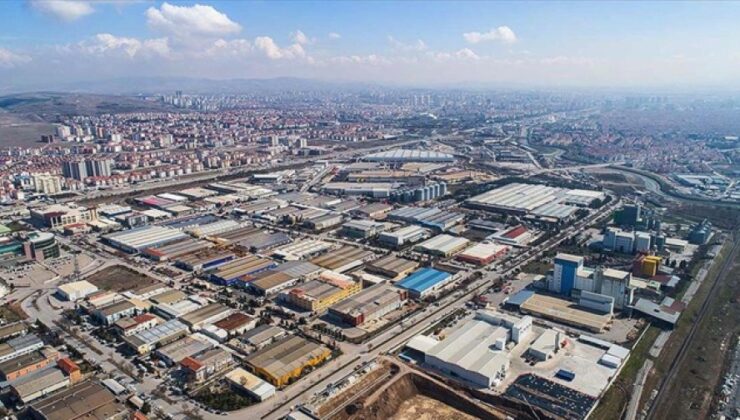 Bursa, 17 OSB ile ‘Türkiye’nin sanayi şampiyonu”
 Kar sağanağı Bursa’yı da vuracak!
 2025 yılı dış ticaret açığı belli oldu
 Balıkesir’de deprem meydana geldi
 Nipah virüsü Türkiye’ye gelir mi?
 Altın fiyatlarında sert düşüş
 DİR’de KDV Tecil-Terkin Uygulaması 5 Yıl Uzatıldı
 15 yaş altına sosyal medya yasağı geliyor
 Doğalgaz ve elektriğe zam gelecek mi?
 Altın fiyatlarında rekor üzerine rekor
 Sanayide Gümrük Birliği alarmı kırmızıya döndü