20 Şubat 2026 itibariyle Covid-19 ile mücadelede aşılanan sayısı kişiye ulaştı.


17:29 /
Ramazan ayı başlıyor
20 Şubat 2026 itibariyle Covid-19 ile mücadelede aşılanan sayısı kişiye ulaştı.



Whoa! This is one of those topics that feels obvious and undercooked at the same time. Prediction markets let people put skin in the game on future events, and blockchains give those markets composability and open access. At first glance it’s just “betting,” though actually—if you look a little deeper—it’s a primitive for information aggregation, hedging, and programmable incentives that DeFi hasn’t fully exploited yet.
Here’s the thing. Prediction markets synthesize dispersed beliefs into prices. Those prices can be used as signals across DeFi rails—collateral decisions, insurance pricing, treasury management—stuff that matters. My instinct said this is low-hanging fruit. But then I paused. The devil is in the details: oracles, liquidity, and incentive alignment. Hmm… those are not trivial.
Seriously? Yes. Because unlike centralized books, on-chain markets can be composable money legos. A resolved market outcome can trigger automated flows: release liquidity, rebalance a vault, mint a derivative. That makes prediction markets more than speculation. They become primitives for conditional finance—if X happens then Y executes—coded into smart contracts that interoperate with lending protocols, AMMs, and treasury modules.
Initial excitement often meets reality checks. Initially I thought markets alone would change everything, but then realized resolution trust and liquidity shallow depth are real blockers. On one hand, decentralized resolution (oracles, juries, crowdsourced truth) reduces censorship risk though on the other hand it creates complexity and dispute vectors that need careful game-theoretic design. You can’t just bolt on an oracle and walk away.

AMMs for binary options create continuous pricing with capital-efficient liquidity provision. That matters because continuous pricing reduces slippage and lets traders express probabilistic views with small amounts of capital. It also opens the door for LP tokens to be reused elsewhere in DeFi—someone could stake LP tokens in a vault, borrow against them, or use them as collateral for synthetic positions. This composability is a huge leverage point.
Check out platforms like polymarket for a sense of how markets look when they’re designed for public participation; that example shows how a clean UX plus fluid markets can attract casual users, not just speculators. I’m biased, but good UX matters a lot—if it’s clunky people bail after the first confusing trade. (oh, and by the way… onboarding needs to feel like an app, not a lesson in cryptography.)
There are also interesting design levers: staking-based dispute resolution, slashing for bad data, resolution windows with economic penalties, and decentralized jury models. Each approach trades off speed, trust assumptions, and attack surface. Longer resolution processes reduce manipulation risk but increase capital lockup. Short windows are more liquid but invite fast, well-funded manipulation attempts.
What bugs me is the naive optimism about liquidity mining as a cure-all. Throw token rewards at a market and liquidity may spike, sure, but liquidity is often very very shallow when incentives vanish. Persistent liquidity requires fee revenue, meaningful user engagement, and cross-protocol utility. Otherwise you get a flash of depth that disappears and leaves slippage and poor price signal quality.
Mechanics matter. For example, market design must consider asymmetric information and informed traders. If insiders can post questions early or influence resolution sources, price signals become noisy or outright misleading. Front-running and MEV are also nontrivial: traders can observe pending transactions and manipulate outcome-based flows if settlement isn’t carefully designed to resist extraction.
Regulatory fog is another dimension. Prediction markets sometimes touch on political event outcomes and gambling laws, and that creates jurisdictional uncertainty. Some teams attempt to sidestep this by focusing on crypto-native outcomes (like “Will token X reach $Y by date Z?”) or by restricting market access by geography, but those are imperfect patches. I’m not 100% sure how this will sort globally, though it’s clear that legal clarity will accelerate mainstream adoption.
Let’s talk opportunities. Prediction markets can serve as oracles for real-world events where traditional price feeds fail—like macro indicators, policy decisions, or corporate milestones. They can enable decentralized insurance that pays out when a predicted event occurs, or create structured products that pay based on aggregated market probabilities. Combine them with identity or reputation layers and you get reputation-weighted markets that resist Sybil attacks while still staying permissionless to a degree.
On the other side, failure modes include low signal quality, oracle capture, brute-force attacks on resolution, and short-termism. Markets that reward instant profits over accurate signaling will degrade; participants who care about long-term reputation and accuracy will withdraw if outcomes don’t reflect true events. So governance design matters: who sets the markets, who resolves them, who owns the platform token, and what are the incentives for honest behavior versus rent-seeking.
Technically, scaling and UX are solvable problems. Layer 2s and optimistic rollups reduce fees and make microtrading feasible. Walletless UX (social recovery, embedded fiat onramps) helps mainstream users enter without being crypto-native. But the cultural and legal shifts take longer. Yeah, tech can fix costs and latency; it can’t single-handedly resolve regulatory or incentive friction.
Here’s one practical roadmap that seems sensible. Start with niche, high-engagement markets where participants have skin in the game—crypto project milestones, protocol governance outcomes, and major sports events. Build composability hooks early: let markets mint tokens that can be used in collateralized positions. Introduce resolution redundancy: multiple oracles + economic dispute system. Earn organic liquidity through fee share and product integrations rather than purely token blips. Over time, iterate governance toward more decentralized models as the user base proves alignment.
Not exactly. Gambling is often zero-sum with poor information flow. Prediction markets are a mechanism for aggregating distributed information into a probabilistic price. That price has utility beyond wagers—if designed well it can inform hedges, insurance, and even automatic fiscal decisions in DAOs.
Key risks are oracle and resolution integrity, shallow liquidity, MEV/front-running, and regulatory uncertainty. Technical fixes exist for some (rollups for fees, cryptographic oracles for some data), but economic and legal design require careful, sometimes slow, iteration.
Prediction markets provide event-based triggers and probability estimates that can feed into automated strategies: conditional vault rebalances, dynamic insurance pricing, treasury hedges, and reputation-weighted governance tools. In short, they transform beliefs into actionable, programmable finance.

“Türkiye bir Lübnan olmasın”
 1
İş dünyası 2020’ye umutla bakıyor
412179 kez okundu
1
İş dünyası 2020’ye umutla bakıyor
412179 kez okundu
 2
Sanayi Bakanı Müjdeyi verdi!
294837 kez okundu
2
Sanayi Bakanı Müjdeyi verdi!
294837 kez okundu
 3
Dış ticaret açığı, ağustosta yüzde 168 arttı
110528 kez okundu
3
Dış ticaret açığı, ağustosta yüzde 168 arttı
110528 kez okundu
 4
Gümrük alacaklarını yapılandırmaya ilişkin usul ve esaslar belli oldu
72497 kez okundu
4
Gümrük alacaklarını yapılandırmaya ilişkin usul ve esaslar belli oldu
72497 kez okundu
 5
“Ekonomi Bilim Kurulu kurulsun”
71876 kez okundu
5
“Ekonomi Bilim Kurulu kurulsun”
71876 kez okundu

KVKK’dan, sosyal medya platformlarına inceleme

Gazeteci Alican Uludağ tutuklandı

Kadına dayak “kemik kırılmadığı sürece” serbest bırakıldı

Kapasite kullanımı şubatta gerilemeye devam etti

Eski İngiltere Prensi Andrew gözaltına alındı

Bir mobilya piyasadan toplatılıyor

Tüketici güveni 11 ayın en yükseğinde

Ünlülere yönelik uyuşturucu operasyonu: 21 kişi adliye sevk edildi

Ücretsiz HPV aşısı Bilim Kurulu’na takıldı

Ramazan ayı başlıyor

KVKK’dan, sosyal medya platformlarına inceleme
Gazeteci Alican Uludağ tutuklandı
Kadına dayak “kemik kırılmadığı sürece” serbest bırakıldı
Kapasite kullanımı şubatta gerilemeye devam etti
Eski İngiltere Prensi Andrew gözaltına alındı
Bir mobilya piyasadan toplatılıyor
Tüketici güveni 11 ayın en yükseğinde
Ünlülere yönelik uyuşturucu operasyonu: 21 kişi adliye sevk edildi
Ücretsiz HPV aşısı Bilim Kurulu’na takıldı
Ramazan ayı başlıyor
bursa escort görükle eskort görükle escort bayan bursa görükle escort bursa escort bursa escort bayan


 News
News
 Genel
Genel
 Genel
Genel
 Genel
Genel
 KVKK’dan, sosyal medya platformlarına inceleme
 Gazeteci Alican Uludağ tutuklandı
 Kadına dayak “kemik kırılmadığı sürece” serbest bırakıldı
 Kapasite kullanımı şubatta gerilemeye devam etti
 Eski İngiltere Prensi Andrew gözaltına alındı
 Bir mobilya piyasadan toplatılıyor
 Tüketici güveni 11 ayın en yükseğinde
 Ünlülere yönelik uyuşturucu operasyonu: 21 kişi adliye sevk edildi
 Ücretsiz HPV aşısı Bilim Kurulu’na takıldı
 Ramazan ayı başlıyor
 İşsizlik oranı dördüncü çeyrekte geriledi
 Altın ve gümüş kayıplarını telafi ediyor
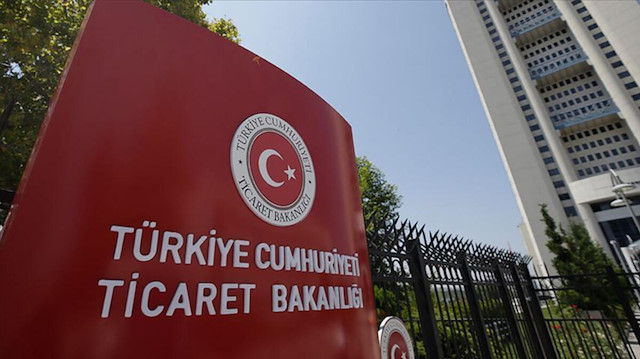 Ticaret Bakanlığı’ndan yasa dışı bahis ve bıçak kararı
 Marmara’da deniz ulaşımına fırtına engeli
 Galatasaray, dünyanın gündemine oturdu.